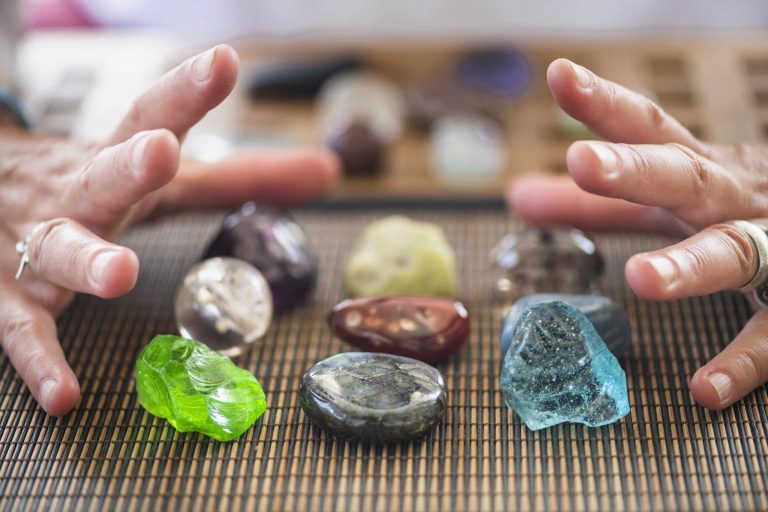

When you set two green minerals side-by-side, they may appear very similar at first glance. But one could be fluorite, while the other is malachite, olivine, or perhaps a weathered mineral with a green outer layer. Because it is easy to observe, color is a good starting point. It is rarely sufficient for identifying a mineral.
The color of a mineral can be altered by impurities, inclusions, weathering or oxidation. Quartz is the classic example of this, as it occurs in clear, smoky, amethyst, rose quartz and other varieties. It is also possible for a weathered outer surface to differ from the fresh interior. Before taking color notes, make sure that you are viewing the mineral and not a weathered surface, a rind, individual crystals, or inclusions in the host rock. Look at your specimen under normal lighting and use a hand lens if needed.
As you practice describing minerals, try to avoid using the word color for a mineral identification. Try to say “pale yellow-green” instead of “green rock.” If it is banded, say “green and white banded.” If there is a dull exterior, say “covered by a powdery green exterior.” Do you know if it is transparent, translucent or opaque? If so, take time to describe the luster. Metallic, vitreous, pearly, or dull? Note any visible crystal faces, grains, cleavage or fracture.
If you have access to two minerals with similar color, cover the label and try to note three things that distinguish them. One may be vitreous and translucent; the other may be dull and opaque. One may show flat cleavage faces; the other may display irregular fracture. The purpose is to get practice describing the features that will ultimately prove to be more important than color.
Streak can sometimes give you a more steady color than what’s on the outside, but you’ve got to use it carefully. Use only appropriate specimens, and only on an unglazed streak plate. Don’t test fragile, polished, coated, or valuable samples. Watch for loose particles, and do not mistake the scrape itself for the powder mark. You may find that a mineral appears black or metallic but leaves a light-colored streak. Include this information in your observations.
Now that we understand the limitations of color as a feature, it can once again become a useful aid for mineral identification. Combine color with observations of luster, hardness, streak, transparency, cleavage, fracture and crystal form. Don’t let color blind you to these other properties. Don’t stop at the identification step of the process either. During your next comparison, don’t be tempted to identify the mineral until you have taken notes on several other features. You’ll be on the right track if your notes read “purple, vitreous, translucent, cleaved,” rather than “I think it is fluorite because it is purple.”